Unlocking Game Performance: A Deep Dive into Actual RTP Calculation and Volatility at Pakwin777
Imagine a game designed to return 96% to players, only to discover its real-world performance is far below this theoretical promise. How do you identify such discrepancies, and more importantly, how do you quantify them? Understanding the actual Return to Player (RTP) of a game is crucial for both operators and players alike, offering transparency and a clear metric for performance. This guide will walk you through the practical steps of calculating real-world RTP, exploring the nuanced interplay of statistical volatility, and ensuring you have the tools to evaluate game fairness and integrity, particularly for dynamic games like Aviator available on Pakwin777.
What is Actual RTP and Why Does it Matter?
Actual RTP, or Return to Player, represents the percentage of wagered money that a game has actually paid back to players over a specific period. Unlike theoretical RTP, which is a design specification, actual RTP is a real-world metric derived from live gameplay data. It's calculated by dividing the total "wins" (money returned to players) by the total "turnover" (money wagered) within a given timeframe. For example, if a game designed with a 91.68% RTP generated £1,200,000 in turnover and £1,085,000 in wins over one month, its actual RTP would be 90.42% (£1,085,000 / £1,200,000). This figure is critical for operators to monitor game performance against its theoretical design and regulatory standards, ensuring that games are functioning as intended and fair to players.
This real-world evaluation becomes even more vital for popular titles like Aviator, where millions of rounds are played daily. Consistent monitoring of actual RTP allows Pakwin777 to verify that the game's mechanics are behaving predictably and within acceptable statistical margins. Players, in turn, can rely on these transparent figures to trust the integrity of their gaming experience. The ongoing analysis of actual RTP provides a data-driven approach to maintaining trust and upholding the high standards of fairness expected in online gaming.
How Do We Calculate Actual RTP Step-by-Step?
Calculating the actual RTP from live gameplay data is a straightforward process once you have the necessary figures: total turnover and total wins. The formula is simply Actual RTP = Total Wins / Total Turnover. Let's break down the process with a concrete example. Suppose, after a month of operation, a particular game on Pakwin777 has accumulated a total turnover of £1,200,000. During the same period, the total amount paid out to players in wins from this game was £1,085,000. Applying our formula:
£1,085,000 (Total Wins) / £1,200,000 (Total Turnover) = 0.9042
This calculation reveals an actual RTP of 90.42% for that specific period. Comparing this to the game's designed theoretical RTP, which in our example was 91.68%, we can see a slight deviation. This simple division provides an immediate snapshot of performance. However, this initial calculation is just the first step. Understanding whether this deviation is significant or merely a product of statistical chance requires a deeper analysis, especially considering the game's volatility. Without considering volatility, a simple actual RTP figure might lead to premature conclusions about game performance.
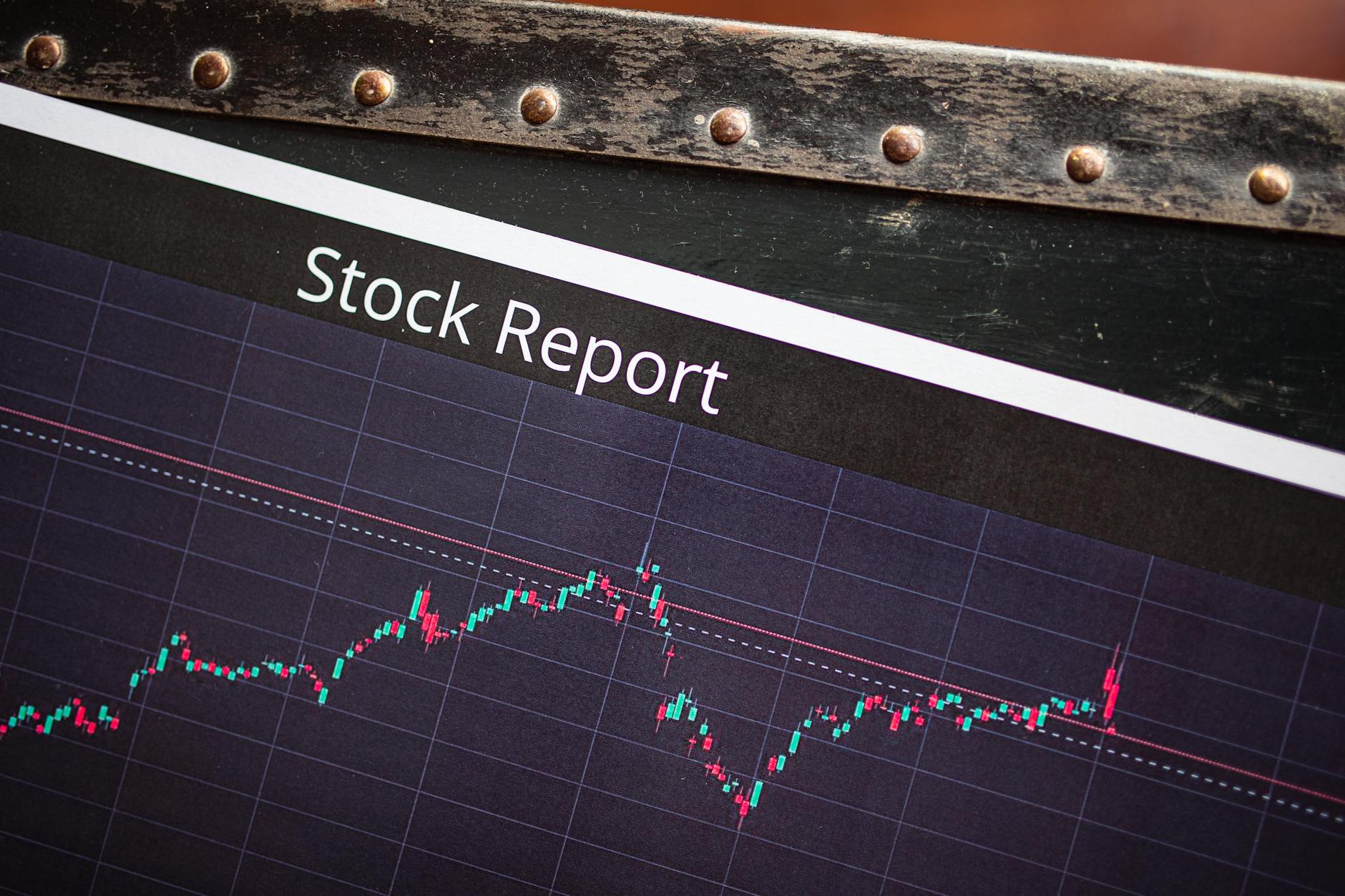
Photo by RDNE Stock project on Pexels
Why Can Actual RTP Deviate from Theoretical Design?
The deviation between a game's actual RTP and its theoretical RTP is primarily driven by the concept of volatility. Volatility, often represented by standard deviation, measures the degree of variation in game outcomes. A game with high volatility might have periods of large wins and long dry spells, causing its short-term actual RTP to swing widely. Conversely, a low-volatility game would see more consistent payouts, leading its actual RTP to converge rapidly towards its theoretical counterpart. For games like Aviator, which involve high-stakes decision-making and sudden outcomes, volatility plays a significant role in how actual RTP unfolds over shorter measurement periods.
The tolerance for this deviation largely depends on the volume of play. When only a limited number of games have been played, the actual RTP can deviate significantly from the theoretical RTP purely due to chance. However, as the volume of play increases, the law of large numbers dictates that the actual RTP should progressively converge towards the theoretical RTP. This convergence is why it's crucial not to jump to conclusions based on limited data. A single month's data might show a game performing below its theoretical RTP, but as more bets are placed and more rounds are completed, this discrepancy is expected to diminish. Understanding this inherent variability is key to accurately interpreting actual RTP figures and assessing game fairness. For further insights into game mechanics, consider exploring our
。How Does Volatility Define Acceptable RTP Ranges?
Volatility is a critical factor in determining the acceptable range within which a game's actual RTP can fluctuate around its theoretical design. A game's designed volatility, alongside its theoretical RTP, establishes statistical boundaries. These boundaries expand with limited play and contract dramatically as the volume of interactions increases. For an example, if a game with a theoretical RTP of 91.68% has a volatility (standard deviation) of 5.6, the permissible upper and lower tolerance levels for its actual RTP will vary significantly depending on the number of measured games played.
Consider the following illustrative table, which highlights how the acceptable deviation from the theoretical mean (with a 95% confidence interval) diminishes with more games played:
| Number of Games Played | Range +/- | % from the Mean† |
| Number of Games Played | Range +/- | % from the Mean† |
|---|---|---|
| 50,000 | +/- | 4.90862 |
| 100,000 | +/- | 3.47092 |
| 200,000 | +/- | 2.45431 |
| 300,000 | +/- | 2.00393 |
| 400,000 | +/- | 1.73546 |
| 500,000 | +/- | 1.55224 |
† This deviation is calculated with a 95% confidence interval, meaning that even a perfectly designed game might fall outside this range approximately 1 in 20 tests. While a higher confidence interval (e.g., 99%) can reduce false alarms, it widens tolerances, which might not always be ideal for monitoring. A single failure doesn't confirm a fault, but consistent or frequent deviations warrant immediate investigation. For example, if 400,000 games were played, the acceptable actual RTP range for our 91.68% theoretical game would be 91.68% +/- 1.73546%, meaning any return between 89.94% and 93.42% would be considered within expected performance. This rigorous analysis helps ensure the integrity of games across Pakwin777. For more on ensuring fairness, check our
。
Photo by Burak The Weekender on Pexels
What are the Implications of Observed RTP Deviations?
When the actual RTP of a game falls outside its statistically defined acceptable range, it raises a flag that warrants immediate attention. While a single instance might be a statistical anomaly (remember the 1 in 20 chance for a 95% confidence interval), persistent or sequential deviations strongly suggest an underlying issue. Such issues could range from subtle glitches in the random number generator (RNG) to errors in game logic or even incorrect theoretical RTP calculations during the design phase. For Pakwin777, these deviations are not just numbers; they are indicators of potential problems that could compromise player trust and regulatory compliance.
The game designers and external testing bodies rigorously calculate both the theoretical RTP and volatility before a game is released. These pre-approved figures serve as the benchmark against which actual performance is continuously measured. If a game, like Aviator, consistently performs below its expected range despite significant play volume, it triggers a comprehensive review process. This involves re-examining the game's code, re-testing the RNG, and verifying all payout mechanisms. The goal is to identify the root cause, rectify it, and re-establish confidence in the game's fairness and accuracy. This transparent approach underscores our commitment to providing a secure and equitable gaming environment.
Maximizing Trust: The Pakwin777 Approach to Transparent Game Monitoring
At Pakwin777, we prioritize transparency and fairness in all our gaming offerings, including popular titles like Aviator. Our stringent monitoring protocols ensure that every game's actual performance aligns closely with its rigorously tested theoretical RTP and volatility figures. By continuously calculating actual RTP and assessing it against statistically sound tolerance levels, we uphold our commitment to integrity. This analytical approach not only helps us identify and address potential issues promptly but also reinforces player confidence in the reliability and fairness of our platform. We believe that informed players make better decisions, and transparent operations build lasting trust. Always remember that while a game's theoretical RTP provides an expectation, it's the meticulous analysis of actual RTP over time that truly validates its performance and fairness.
Frequently Asked Questions
Q: What is Aviator?
A: Aviator is a social multiplayer crash game where an increasing multiplier curve can crash at any time. It moves away from traditional slot mechanics to offer a real-time, decision-based experience.
Q: How does Aviator work?
A: You place a bet and watch a plane take off with a rising multiplier. Your task is to click "Cash Out" before the plane flies away. If the plane disappears before you settle, your bet is lost.
Q: Can I play Aviator for free?
A: Yes. Most licensed platforms offer a "Demo Mode" where you can use virtual credits to practice the timing and explore the interface without any financial risk.
Q: Is Aviator a slot game?
A: No, it is classified as a "Crash" or "Instant" game. It does not use reels, symbols, or paylines; instead, it relies on a single rising multiplier and player-controlled exit points.
Q: Can I play Aviator on mobile?
A: Absolutely. The game is built on HTML5 technology, making it fully compatible with all modern smartphones, tablets, and desktop browsers.
Q: Is Aviator easy for beginners?
A: Yes. The rules are intuitive: watch the number go up and click before it stops. However, we recommend starting with the demo to get used to the speed of the flight.
Q: Is there a strategy for Aviator?
A: While the outcome is random, many players use the "Double Bet" strategy—cashing out one bet at a low multiplier (like 1.5x) to cover costs, while letting the second bet run for higher gains.
Q: Is Aviator available everywhere?
A: Availability depends on your local gambling laws and the specific casino operator’s license. Always verify the legal status of online gaming in your region before playing.
Q: How do I know the game is fair?
A: Aviator uses "Provably Fair" technology. This means the result of each round is generated via a transparent cryptographic hash that any player can independently verify after the round ends.
Q: What is the maximum win in a single round?
A: The multiplier can technically reach 10,000x, but this is extremely rare. Maximum payouts are also subject to the specific limits set by the casino platform you are using.
FAQ
What is the difference between actual RTP and theoretical RTP?
Theoretical RTP is the designed percentage a game is supposed to return to players, while actual RTP is the real-world percentage calculated from live gameplay data over a specific period. Actual RTP shows how the game is truly performing compared to its theoretical design.
How do you calculate actual RTP for a casino game?
Actual RTP is calculated using the formula: Total Wins divided by Total Turnover. For example, if a game pays out £1,085,000 in wins from £1,200,000 in total wagers, the actual RTP would be 90.42%.
Why is monitoring actual RTP important for online casinos?
Monitoring actual RTP allows operators to verify that games are functioning as intended and meeting regulatory standards. It ensures game fairness and helps maintain player trust by providing transparent, data-driven proof of game integrity.
What does game volatility mean in relation to RTP?
Game volatility refers to the frequency and size of payouts, which can cause actual RTP to fluctuate around the theoretical RTP in the short term. High volatility games may show larger deviations from theoretical RTP over shorter periods.
How often should actual RTP be calculated and reviewed?
Actual RTP should be monitored continuously, with regular reviews conducted monthly or quarterly depending on the game's popularity and regulatory requirements. Frequent monitoring helps identify any discrepancies early and ensures ongoing game performance meets expected standards.